

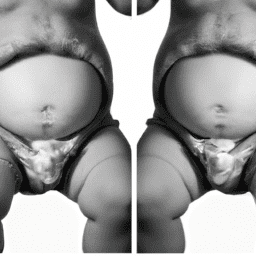
For pregnant women, determining the position of their baby is an exciting milestone. Knowing if the baby is growing on the left or right side of the stomach can provide important information for the health of the pregnancy. This article will explain the ways of determining the baby’s placement and the significance of the left or right position.
Determining Baby’s Placement
The position of the baby can be determined by a doctor through ultrasound. An ultrasound uses sound waves to create an image of the baby, and the image will show the position of the baby in the uterus. The baby’s position is usually noted on the ultrasound report.
In addition to an ultrasound, the position of the baby can also be determined through a physical exam. During the exam, the doctor will use their hands to feel the shape and size of the baby and its position in the uterus.
Left or Right Stomach Position
The position of the baby in the uterus is significant for two reasons. First, the position of the baby can determine the type of delivery. For example, a baby that is in a left or right facing position is more likely to be born vaginally, while a baby that is in a breech position is more likely to be born via cesarean delivery.
Second, the position of the baby can affect the amount of room the baby has to grow. A baby that is on the left side of the stomach will have more room to grow, while a baby that is on the right side of the stomach will have less room to grow.
In conclusion, the position of the baby in the uterus is an important milestone for pregnant women. Knowing if the baby is on the left or right side of the stomach can provide information about the type of delivery and the amount of room the baby has to grow. With the help of an ultrasound or physical exam, a doctor can determine the position of the baby.
When expecting a new baby, parents often wonder about various aspects of the body and its development. One such curiosity is what side the baby grows in the mother’s womb.
More than likely, a baby will grow on the mother’s left side. This is known as a cephalic presentation and indicates that the baby’s head is facing down towards the exit. This is the ideal position for labor and delivery and is the most common position for babies within the womb.
It is not uncommon, however, for a baby to settle in the right side or the back of the uterus. This is known as a breech presentation. Although it is not ideal, babies may remain in this position up until the beginning of labor. In some cases, they may need to be manually maneuvered before delivery.
Whether the baby is lying on the left or right side, he/she will still receive adequate amounts of nutrition and oxygen through the placenta, so there is usually no immediate cause for concern. Additionally, the stomach is located in the upper region of the abdomen and not near the side of the uterus where the baby will be growing, so it won’t be an influencing factor one way or another.
In the end, the vast majority of babies will settle into the left side of the uterus and, barring any complications, should remain there until birth.
