

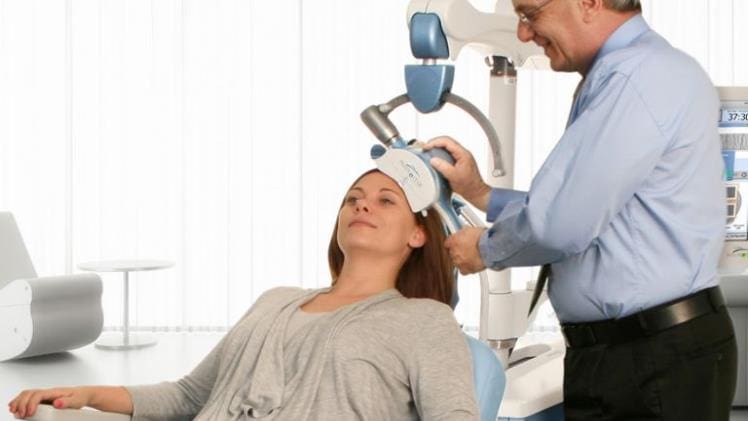
Transcranial Magnetic Stimulation (TMS) is a non-invasive, painless and drug-free treatment that uses a targeted magnetic field to stimulate nerve cells in the brain. It is a form of neuromodulation that has been used to treat a range of neurological and psychiatric disorders, including depression, anxiety, obsessive-compulsive disorder, post-traumatic stress disorder, chronic pain and stroke.
TMS works by sending magnetic pulses to the area of the brain responsible for controlling mood and behaviour. These pulses activate nerve cells and alter the activity of brain circuits. This can help to create new neural pathways, which can lead to improved symptoms.
TMS is a safe and well-tolerated form of treatment. It does not require anesthesia or other sedatives, and can be performed on an outpatient basis. The most common side effects are a mild headache or scalp discomfort during the treatment session.
Transcranial Magnetic Stimulation Therapy can be used as an alternative to medications or psychotherapy, or as an adjunct to them. It is especially useful for people who cannot take antidepressants or whose symptoms do not respond to other treatments.
In recent years, research has suggested that TMS may also be effective in treating a variety of other conditions. These include chronic pain, migraine, bipolar disorder, autism, Alzheimer’s disease, and Parkinson’s disease.
TMS is a relatively new treatment, and more research is needed to better understand its potential benefits and risks. However, it is becoming increasingly popular as a safe and effective way to treat a range of neurological and psychiatric conditions. TMS is an exciting new form of therapy that could revolutionize the way we treat mental health conditions.
Treatment of Transcranial Magnetic Stimulation) Therapy
Transcranial Magnetic Stimulation (TMS) Therapy is a relatively new and cutting-edge treatment for depression and other mental health issues. It involves the use of a specialized magnetic device to stimulate the brain cells in order to alter their activity and improve mood and mental health.
TMS Therapy works by sending magnetic pulses through a device placed near the scalp. The pulses then pass through the skull and into the brain, where they influence the activity of neurons. This process is believed to be able to help with a variety of mental health issues, including depression, anxiety, obsessive-compulsive disorder (OCD), post-traumatic stress disorder (PTSD), and addiction.
TMS Therapy is usually administered in a doctor’s office or medical facility. It is typically done five days a week for four to six weeks. During each session, the patient may receive anywhere from one to five pulses per second, depending on the type of disorder being treated. After a session is complete, patients usually report feeling relaxed and rejuvenated.
TMS Therapy has been found to be effective in treating depression, with studies showing that after four to six weeks, roughly 50 percent of patients experienced a significant improvement in their symptoms. It has also been found to be effective in treating anxiety, OCD, and PTSD, as well as addiction.
The most common side effects associated with TMS Therapy are headaches, scalp discomfort, and lightheadedness. There is also a risk of seizure during treatment, but this is rare and is usually the result of the patient having an underlying seizure disorder.
TMS Therapy is a safe and effective treatment for depression, anxiety, OCD, PTSD, and addiction. It has been found to be more effective than other treatments and is an excellent option for those who are looking for an alternative to medication or traditional psychotherapy. If you are considering TMS Therapy, it is important to talk to your doctor to make sure it is the right treatment for you.
