

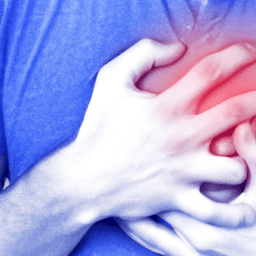
Most of us have experienced a sudden sharp pain in our chest at some point in our lives. This type of discomfort is often fleeting, lasting only a few seconds or minutes. Although it can be alarming, it is usually nothing to worry about and can be caused by a variety of factors.
Sudden Chest Pain
Sudden chest pain can be described as a sharp, stabbing sensation that can last from a few seconds to a few minutes. It can occur anywhere in the chest, from the bottom of the ribcage to the upper chest near the collarbone. The pain may be accompanied by a burning sensation, or it may be localized to one area. It is often described as a sharp, stabbing sensation, or as a feeling of pressure or tightness in the chest.
Short-Lived Discomfort
The good news is that this type of chest pain is usually short-lived, with the discomfort dissipating within a few seconds or minutes. It is usually not a cause for alarm and is often caused by something as simple as a muscle spasm or indigestion. Other causes of sudden sharp chest pain include stress or anxiety, overexertion, or a heartburn episode.
If the pain does not go away after a few minutes, or if it is accompanied by shortness of breath, chest tightness, or an irregular heartbeat, it is important to seek medical attention.
Sudden chest pain is usually nothing to worry about and can be caused by a variety of factors. It is important to pay attention to the symptoms, however, and if the pain persists or is accompanied by other symptoms, it is important to seek medical attention.
Recent reports have raised awareness of a type of chest pain that could be a sign of a life-threatening medical emergency. The primary symptom is a sudden, sharp pain that goes away quickly.
This phenomenon, known as “paroxysmal chest pain”, is often mistaken for a common muscle strain that can occur from lowering and raising heavy items or from a minor impact, such as sneezing. However, the two types of pain are distinct and must be treated differently.
What sets paroxysmal chest pain apart from other chest pain is its sudden onset, sharp and stabbing sensation, and how quickly it goes away (in seconds or minutes). Paroxysmal chest pain must be taken seriously and can be potentially life-threatening. If you experience this type of pain, seeking medical help is urgent.
The underlying cause of paroxysmal chest pain can be varied and can include things like an extinguished electrical pathway in the heart, pulmonary embolism, or aortic dissection. In order to diagnose and treat the cause of the pain, a doctor will need to take a medical history, perform a physical examination, and order medical tests like an ECG or X-ray.
In conclusion, any sudden, sharp pain that goes away quickly should be taken seriously and medical help should be sought right away. Not all chest pain is bad, but if the symptom persists or worsens, seeing a medical professional is essential.
