

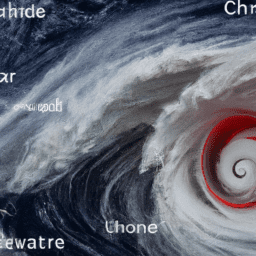
Tropical cyclones are violent storms that can cause massive destruction. They are classified into categories based on their wind speed. Category 1 storms have the lowest wind speeds, while category 5 storms have the highest. Despite the higher wind speeds of category 5 storms, category 1 storms can often be more destructive.
Category 1 vs. Category 5
Category 1 tropical cyclones are storms with sustained winds of 64 to 82 knots (74 to 95 mph) and gusts of up to 95 knots (110 mph). Category 5 tropical cyclones, on the other hand, have sustained winds of more than 156 knots (178 mph) and gusts of up to 194 knots (223 mph).
Category 1 storms are generally less powerful than category 5 storms, and as a result, they do not cause as much physical destruction. However, they can still be very destructive, as they can cause flooding, power outages, and other forms of destruction.
Reasons for Greater Destruction
The primary reason why category 1 storms can be more destructive than category 5 storms is because they can last longer. Category 5 storms are more powerful, but they are typically short-lived. Category 1 storms, on the other hand, can last for several days, and this gives them more time to cause destruction.
Another reason why category 1 storms can be more destructive is because they are more common. Category 5 storms are rare, and as a result, people are often not as prepared for them. Category 1 storms, however, are more common, and as a result, people are better prepared for them and can take the necessary precautions to protect themselves and their property.
Finally, category 1 storms can be more destructive because they can cause flooding. Category 5 storms can cause flooding as well, but the winds of category 1 storms are not strong enough to push the water away from the coast, which can cause significant flooding.
In conclusion, while category 5 storms are more powerful and can cause more physical destruction, category 1 storms can be more destructive because they can last longer, are more common, and can cause flooding. Therefore, it is important to be prepared for both category 1 and category 5 storms, as both can cause significant destruction.
Tropical cyclones, also known as hurricanes or typhoons, are large, rotating storm systems that are driven by the energy of the warm ocean waters. The intensity of a tropical cyclone is measured using the Saffir-Simpson scale, ranging from Category 1 (the weakest) to Category 5 (the strongest). While Category 5 storms have the greatest potential for destruction, it is important to understand that Category 1 storms can be just as, if not more, devastating in certain circumstances.
One of the main differences between Category 1 and Category 5 storms is the wind speeds associated with each. Category 5 storms have maximum sustained winds of 154-157 mph while Category 1 storms can reach winds of 74-95 mph. While higher wind speeds are associated with more intense damage, wind is not the only factor that determines the destructive potential of a storm.
A major influence on the impacts of a storm is its size. Category 5 storms can have large, expansive areas of damaging winds known as hurricane wind fields. Due to the strength of the winds, these fields can be as large as 400 miles in diameter. In comparison, Category 1 storms can have relatively small wind fields, as small as 25-30 miles in diameter.
The size and wind speed of a storm are important factors in determining the flooding potential associated with a tropical cyclone. Larger storm systems have a tendency to move more slowly, resulting in powerful storm surge which can cause extensive flooding and damage. Furthermore, the slow-moving nature of these storms can also lead to prolonged periods of heavy rainfall, which can result in serious flooding events. On the other hand, the shorter wind fields of Category 1 storms cause less powerful storm surges, however they can still be enough to cause massive flooding events in certain areas, such as those on low-lying coastlines.
For this reason, Category 1 storms can be more destructive than Category 5 storms in some cases. When these storms hit an area, the devastating effects of flooding can be much greater than the wind-related damage normally seen in category 5 storms. While the chances for severe destruction are much higher for stronger storms, it’s important to understand the wide range of impacts that Category 1 storms can have.
