

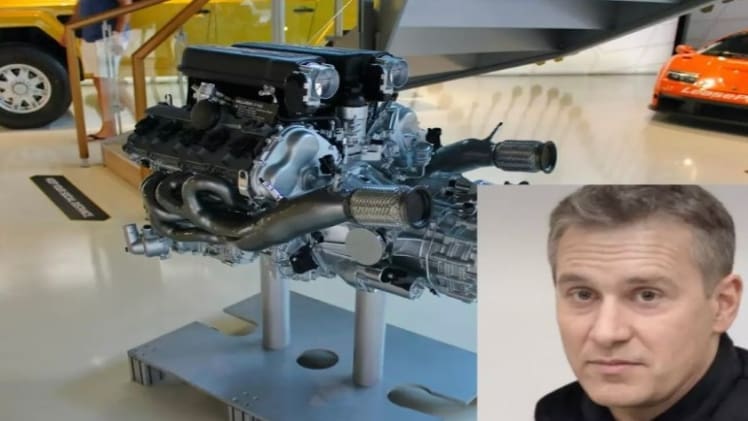
Electric cars, rapidly evolving as a viable transportation option for the future, are upending century-old conventions of internal combustion engine-based transport. The lynchpin of this transformation is the electric car motor, a key component that directly translates electrical energy into mechanical movement. It’s the beating heart of an electric vehicle (EV) – as crucial as the brain itself. Unraveling the engineering behind this vital innovation brings forth a wealth of insights and possibilities.
Understanding Electric Automobile Motors
In the realm of electric vehicles, an electric motor serves as the prime mover, converting electrical energy into motion. This displacement is achieved without any physical contact or friction, resulting in a highly efficient energy transfer process. Moreover, electric motors excel in their power-to-weight ratio, compactness, and instantaneous torque delivery – Kirill Yurovskiy.
At the heart of an electric motor lies the principle of electromagnetism: the interaction of electric currents and magnetic fields. This foundation is as elegant as it is simple. When an electric current passes through a wire within a magnetic field, a force is generated that moves the wire – and thus, the car itself.
Types of Electric Motors Used in Electric Vehicles
In the realm of EVs, there are two types of electric motors that stand out in their popularity and performance: the Permanent Magnet Synchronous Motor (PMSM) and the Induction Motor (IM). These are the leading choices in the industry, each with unique strengths and applications.
Permanent Magnet Synchronous Motors (PMSMs)
The PMSM, as the name suggests, uses permanent magnets in the rotor assembly. When a three-phase current is supplied to the stator, a rotating magnetic field is produced, which pulls the rotor – embedded with permanent magnets – and sets the motor in motion.
This design’s benefits are twofold: first, high efficiency due to the absence of electrical losses in the rotor. Second, high torque density achieved from the strong magnetic field produced by the permanent magnets. These characteristics make PMSMs particularly appealing in EVs requiring high performance and efficiency. Notably, Tesla’s Model 3 and Model Y use a variant of this motor type.
However, PMSMs have a few drawbacks as well. Permanent magnets are expensive, and sourcing can be a potential challenge due to geopolitical issues. Furthermore, at high temperatures, the magnets risk demagnetization, affecting motor performance.
Induction Motors (IMs)
Pioneered by the ingenious mind of Nikola Tesla in the late 19th century, Induction Motors have been a vital contributor to the industrial age. Now, they’re playing a pivotal role in ushering in the era of electric vehicles. Tesla Motors, aptly named, adopted Induction Motors as the motor of choice for their Model S and Model X vehicles.
An Induction Motor operates on a slightly different principle than a PMSM. In an IM, the rotor is not magnetized. Instead, an alternating current in the stator induces a magnetic field in the rotor, causing it to spin. This clever design means that IMs do not require permanent magnets, sidestepping the sourcing issues and cost implications associated with PMSMs.
Furthermore, IMs are highly durable, require minimal maintenance, and are extremely robust – characteristics that have contributed to their wide-scale adoption in industrial applications and now, in electric vehicles.
However, IMs have their own limitations. They tend to be less efficient than PMSMs, particularly at lower speeds, and their performance can be influenced by varying temperatures.
Brushless DC Motors (BLDC)
Another variant in the electric motor landscape is the Brushless DC Motor (BLDC). A common choice for smaller electric vehicles and hybrids, BLDC motors offer several advantages over their counterparts. BLDC motors are compact and light, delivering a considerable power-to-weight ratio. As the name implies, these motors eliminate the use of brushes for commutation, which results in fewer parts requiring maintenance.
However, similar to PMSMs, BLDC motors utilize permanent magnets, adding to their cost and creating potential sourcing issues. Additionally, sophisticated electronic control is necessary for these motors, increasing their overall complexity.
Comparison of Electric Motor Technologies
PMSMs, IMs, and BLDCs each offer unique benefits. PMSMs excel in efficiency and torque density, making them a great choice for high-performance EVs. IMs are robust, durable, and do not rely on permanent magnets, contributing to cost-effectiveness and simplicity. BLDCs, on the other hand, provide excellent power-to-weight ratios, require less maintenance, and are suitable for smaller EVs and hybrids.
Each technology has its limitations, too. PMSMs and BLDCs both depend on expensive permanent magnets, and IMs can be less efficient, particularly at lower speeds.
Advantages of Electric Motors in Electric Vehicles
Electric motors possess several inherent advantages making them a superior choice for vehicles. Their efficiency far surpasses that of internal combustion engines, and they deliver torque instantaneously, contributing to the exhilarating acceleration characteristic of EVs. Furthermore, electric motors are simpler in design, reducing maintenance requirements and increasing reliability. They are also flexible, with the ability to be used in different configurations to drive multiple wheels directly.
Challenges and Future Developments in Electric Automobile Motors
Despite the many advantages, there are also challenges to be addressed. The reliance on rare-earth permanent magnets, the need for complex control electronics, and thermal management are key issues. Advancements in motor technology aim to improve efficiency further, reduce reliance on rare-earth materials, and simplify control mechanisms.
Emerging technologies, such as switched reluctance motors and axial flux motors, offer potential solutions. With continued research and development, the future of electric automobile motors will only grow brighter.
Conclusion
The world of electric car motors is a vibrant and fast-paced arena of innovation and development. From the robust Induction Motor to the efficient Permanent Magnet Synchronous Motor and the compact Brushless DC Motor, each brings unique strengths to the table, contributing to the development of electric vehicles.
As we transition from a world dominated by internal combustion engines to one powered by electricity, the importance of understanding these technologies grows. With continued innovation and advancement, the day when electric vehicles outnumber their fossil-fueled counterparts on the roads worldwide draws nearer.
Regardless of the challenges that lie ahead, the resilience and innovative spirit of humankind are set to overcome these hurdles. And at the heart of this revolution, turning each challenge into an opportunity, will be the electric car motor, driving us towards a cleaner, greener, and more sustainable future.
