

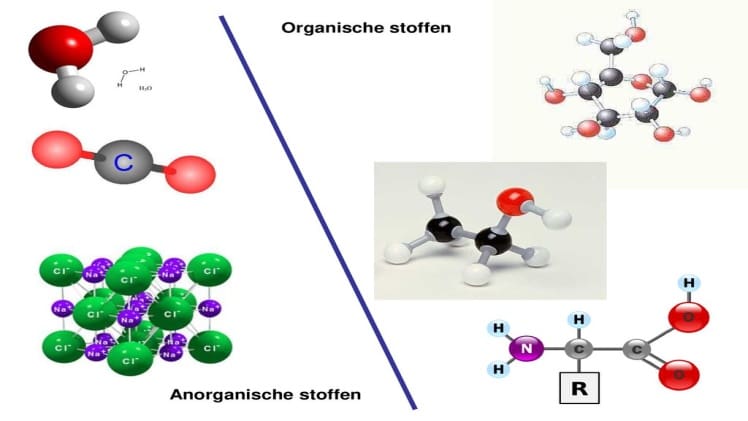
Organic compounds are molecules that contain carbon-hydrogen bonds, making them the building blocks of life. Most organic compounds are synthesized from inorganic sources, such as minerals and metals. One of the first organic compounds to be synthesized from inorganic sources is formaldehyde, a colorless, pungent gas.
Organic Compound from Inorganic Sources
Formaldehyde is a simple organic compound that can be synthesized from inorganic sources. It is composed of two hydrogen atoms and one oxygen atom, and is a colorless, pungent gas. Formaldehyde can be synthesized from methanol, a simple alcohol, and an inorganic source of oxygen such as air. The reaction between methanol and oxygen produces formaldehyde and water. Formaldehyde is also a byproduct of combustion and can be found in car exhaust and cigarette smoke.
Synthesizing an Organic Substance
Formaldehyde can be produced synthetically through a process known as the Cannizzaro reaction. This reaction involves the oxidation of methanol with an inorganic source of oxygen, such as air. The reaction produces formaldehyde and water as byproducts. The Cannizzaro reaction is a simple, efficient process that is used in the industrial production of formaldehyde.
Formaldehyde is a simple organic compound that can be synthesized from inorganic sources. It is composed of two hydrogen atoms and one oxygen atom, and is a colorless, pungent gas. Formaldehyde can be synthesized through the Cannizzaro reaction, which involves the oxidation of methanol with an inorganic source of oxygen. The reaction produces formaldehyde and water as byproducts, and is used in the industrial production of this organic compound.
